
Vinoraa, with its long-standing aromatic expertise, focuses on creating serene incense Agarbaatti and soul-soothing Smudges.
269, Kothari House, Raja Ram Mohan Roy Road, Near Central Plaza Cinema, Charni Road East. Mumbai- 400004, India
A practical guide to choosing pure, natural dhoop sticks for everyday pooja and mindful living
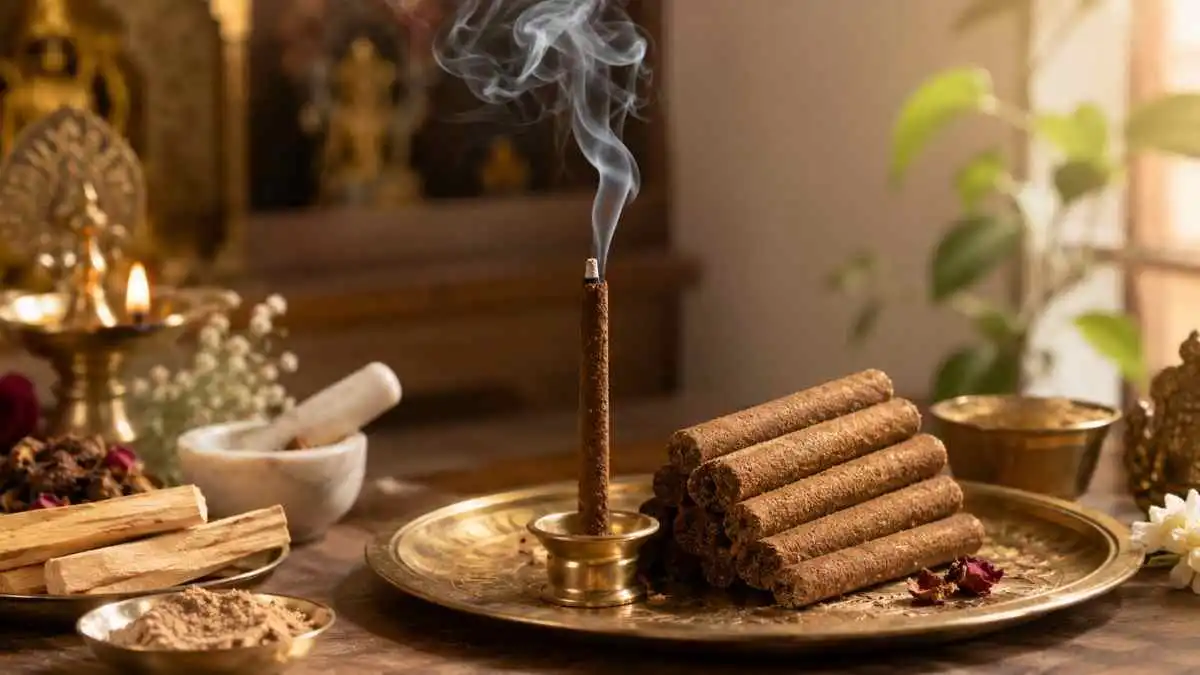
Most Indian homes still light something before the morning pooja. Often it isn't the regular incense stick from the local shop. It's dhoop. No bamboo core running through it, just rolled paste, so the smoke sits heavier in a room and stays longer once it's lit. Agarbatti has a stick down the middle. Dhoop doesn't. People mix the two up constantly until someone actually shows them the difference. Buyers ask more questions these days too, mostly around what's inside the roll and whether it's fine to burn indoors for a while. Natural Dhoop Sticks used to sit mostly in specialty stores. These days they show up just as often on a regular kitchen shelf, sometimes even in a small office drawer. What follows covers what dhoop is actually made of, why households keep relying on it, the common types worth knowing, and what separates the best dhoop sticks from ones that are just smoke without much else going for them.
Cut through the spiritual talk and Dhoop Sticks are basically rolled herbal paste, no core, no stick, that gives off fragrant smoke once you light it. Powdered wood, resin, a bit of essential oil, and natural gum to hold it all together, pressed firm so it doesn't just flare and die out in two minutes. Because there's nothing burning inside except the paste itself, a lot of people say the smoke feels cleaner, thicker somehow. It shows up at pooja time, during meditation, or right before guests arrive when someone wants the room to smell different, fast. Sandalwood dhoop sticks are common in most homes for a fairly simple reason, people grew up around that smell and stuck with it. Some households keep to that one variant permanently. Others rotate between herbal and resin blends depending on the season or the occasion.
Some families burn dhoop purely out of habit, it was around before they were, so it stayed part of the routine. Others connect it to something more specific, the idea that lighting it before prayer settles the room, and maybe the mind along with it. Either way it's rarely just decoration. An organic dhoop stick skips synthetic oils, and that starts to matter once you're burning something every day rather than twice a year during festivals. A fair number of buyers have quietly swapped spray fresheners for products where every ingredient on the pack is something they can actually read and understand. Ask around and that's usually what people mean when they bring up Dhoop Sticks Benefits, not marketing copy, just fewer things on the label they can't pronounce.
More variety here than most first-timers realise.
Few things worth checking before you buy a box, or a hundred boxes.
Finding a proper organic dhoop stick isn't as easy as it should be, honestly, the market's flooded with stuff that's mass-produced and barely natural. This is exactly why it helps to deal with a recognised name among Dhoop Sticks Manufacturers in India, whether you're buying one pack for home or placing a repeat wholesale order. Vinoraa, which runs under Ravino Industries, has built its name on charcoal-free, hand-finished products, sandalwood, vetiver roots, saffron, that kind of botanical range, with everything from small retail packs to full export orders on their books. Their sandalwood dhoop sticks cover the everyday home-altar crowd, while the herbal rolls tend to suit wellness studios better, so buyers aren't stuck chasing five different vendors just to keep quality steady.
Some of the benefits are the following:
A quick look at where Dhoop Sticks Uses actually show up in day-to-day life, not just in theory.
Rough comparison of the common ritual fragrance formats below, nothing about size or price here, just the basics.
| Format | Base Structure | Typical Smoke | Common Setting |
|---|---|---|---|
| Dhoop Sticks | Coreless rolled paste | Dense, long-lasting | Pooja, meditation, cleansing |
| Agarbatti | Bamboo core coated with paste | Light, steady | Daily home fragrance |
| Resin Incense | Loose resin burned on heat | Thick, aromatic | Deep cleansing rituals |
| Smudge Bundles | Bound dried herbs | Smoky, herbal | Space clearing ceremonies |
Here are some of the expert tips and buying guides:
Vinoraa, as the brand under Ravino Industries, was established in 2008 by Mr. Umesh Soni, who is India's first and only manufacturer of smudge incenses, an artisanal craft. We are a 100% export-orientated company that is filling markets with high-quality spiritual products that evoke a feeling of peace and tranquillity.
We have more than 50 unique SKUs available such as smudge sticks, herbal bundles, Palo Santo, and speciality chakra items. We use the purest botanicals from the natural world, such as white sage, sandalwood, and saffron, to carefully create our products for cleansing, meditation and aromatherapy. We sell premium aromatic treasures to international buyers on a trusted B2B wholesale basis, where we quote the price according to the specific requirements.
Picking the right dhoop really comes down to two things, what's actually in it, and how you plan to use it. Maybe you just want something calming for the house. Maybe you're a retailer sizing up Dhoop Sticks Wholesalers in India for the next order. Either way it's the same checklist, honest ingredients, careful finishing, a burn that doesn't throw surprises at you halfway through. As more people build small mindful habits into their day, natural dhoop keeps its place, whether it's lit at home or sourced through trusted Dhoop Sticks Exporters in India shipping well past Indian borders.
Take a look at Vinoraa's natural, charcoal-free dhoop and smudge incense, built for daily rituals and bulk wellness sourcing, send an enquiry whenever you're ready.
Contact us today to request samples, discuss bulk quantities, and get a customised quotation
No. Agarbatti runs on a bamboo core, dhoop doesn't have one at all. That absence changes the burn, it comes out denser, smokier, holds longer per stick. Pick either one up and you can actually feel the difference in your hand before lighting anything, dhoop's heavier, packed tighter, doesn't bend like a stick would.
Generally yes. Charcoal-free dhoop produces less soot than regular incense, so a lit room isn't as harsh as people assume. Problems start when it's placed too close to curtains, or burned in a shut room for hours straight. Keep it away from fabric, crack a window, and most homes handle it fine.
Sandalwood, mostly, for a regular daily routine. It burns evenly and the smell never gets overpowering even through a long session. Herbal blends work too, just better suited to smaller rooms where heavy smoke tends to sit too long. Honestly, go with whatever fragrance is already familiar in the house before buying something new.
Sandalwood, mostly, for a regular daily routine. It burns evenly and the smell never gets overpowering even through a long session. Herbal blends work too, just better suited to smaller rooms where heavy smoke tends to sit too long. Honestly, go with whatever fragrance is already familiar in the house before buying something new.
Somewhat, not risk-free though. Organic dhoop skips synthetic oils, so it does sit lighter on the lungs generally. Smoke is still smoke regardless. Anyone with asthma should burn it near an open window, keep the session brief, and stop right away if breathing starts feeling off. Not worth pushing through discomfort for fragrance.
Most Dhoop Sticks Wholesalers in India set some kind of minimum order, though it isn't standard across the industry. Some fix it by weight, others by carton count or product mix, and export shipments often carry separate minimums from domestic orders. Terms vary enough between suppliers that it's worth confirming each time.